Tuesday, 31 May 2011

Google wallet security has weak link

Google have worked hard on the security of their new mobile wallet but concerns have still cropped up. According to the some, the 'authorised' Android app at the end of the chain is the weak link. Most of the process of paying with the mobile wallet is covered by the same security as more traditional payment systems and the phone itself has a tamper-proff encrypted chip specifically for storing card data.

The Android app itself is still protected by a PIN code but Oliver Lavery, Director of Security Research and Development for nCircle, said:
"Many people don't set PINs on their phone, in spite of how easily this sort of device can be lost or stolen."
Experts have also identified the risks inherent in the 'open' nature of the Android app system. The potential is there for a fraudster to create their own app which can be used to trick the smartphone into giving up users' details.

Monday, 30 May 2011

Payments council launches industry-wide m-commerce project

The Payments Council has launched a new project which will work with UK banks and building societies on delivering mobile payments. Unlike many recent initiatives this project will focus on moving money between bank accounts, rather than on contactless payments. Payments Council acting CEO Gary Hocking said:
"It is still early days in this project but we want to explore how a mobile phone can help customers make a payment from one account to another. Of course security is a priority for us, and the work being done to bring this technology to life will focus on this. This industry-wide project will help deliver a way of sending money that is safe and easy for consumers."
Their initial research suggests that around a quarter of people would be likely to use a mobile payments service.

Sunday, 29 May 2011

Google launches mobile wallet, eBay sues

On Thursday Google launched a new Android app which would turn the phone into a mobile wallet. The app uses virtual card which allow handsets to be used for contactless payments. Citibank is the initial partner but the service will expand, including reward schemes, gift cards, boarding passes and possibly even keys as well as credit cards.

Within hours of the launch, Google were being sued by auction giant eBay, who alleged that their trade secrets had been stolen and used in building the technology. The crux of the complaint is that Google Wallet project lead Osama Bedier was poached away from PayPal in the middle of negotiating a deal between Android and eBay-owned PayPal.

Google is yet to respond to the accusations but if the case goes to court and Google loses, it could seriously damage the fledgling service,

Meanwhile, Apple will be watching with interest. Reports suggest they are preparing their own foray into mobile payments. Although reports differ on whether NFC technology will be included in the next generation of their iPhone.

Saturday, 28 May 2011

'Mobile money' is a new way to provide aid

Earlier this year, USAID and Mercy Corps started using mobile phones as a way to give Haiti aid for emergency food supplies. The Kenbe-La scheme works with phone company Voila and Unibank to provide beneficiaries with $50 a month in 'e-cash'. Using low-cost phones provided by Voila, those using the scheme get their money by text message which they can then use at over 50 shops to buy rice, beans, oil and maize.

The scheme isn't completely mobile, though. The participating stores receive the e-cash from shoppers using a special till and pin-code and then obtain hard cash from Unibank.

Friday, 27 May 2011

Dorsey's Square now processing $3m a day

Jack Dorsey's Square is now processing $3m in payments every day. Square offers a device which allows anyone with a smartphone to process card payments and has proved a big hit since it launched. New functionality has also been added by Square this week.

On Monday Dorsey revealed Card Case, a mobile wallet. Card Case will mean consumers no longer need a credit card for small purchases. Instead they will be able to set up a digital tab under their name, similar to the system used on the iTunes store.

Square is one of a growing number of companies looking to turn smart phones into digital wallets. According to Dorsey, cash and cards are becoming "relics of an expensive, complicated and impersonal commercial transaction system."

Thursday, 26 May 2011

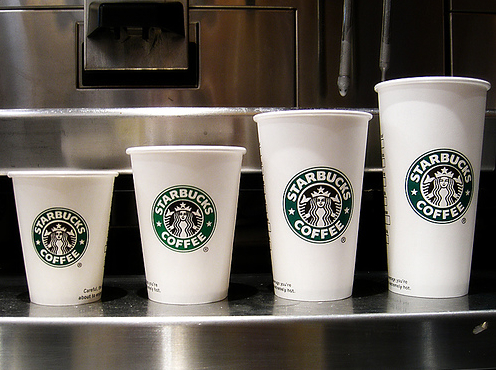
Starbucks set to introduce contactless payment

Starbucks have become the latest big company to show an interest in contactless payments. In a partnership with Barclaycard and Visa Europe, Starbucks are to trial contactless payments in their UK stores. The trial for contactless credit/debit cards starts next Spring and follows the introduction of smartphone-based payments in their US stores earlier this year. If the trial is successful, the scheme will be rolled out across the company's UK and Ireland stores.

Pete Blower, Starbucks EMEA Technology Services Manager, says: "At Starbucks we're as committed to customer service as we are to great coffee. We're seeing more and more people use cards for payment and contactless will allow us to serve our customers more quickly and with greater ease."

Tuesday, 24 May 2011

Young consumers are looking forward to NFC mobile payments

Nearly two-thirds of 18-34 year olds are happy using their mobile phone to pay for things. A study by Kelton Research for Mastercard also found that 65% of young Americans woudl rather be without their waller than their phone.

Conversely 63% of respondents over 35 said they would not feel comfortable using their mobile phones to make purchases. Many people also felt that issues of privacy and security need to be addressed before they would trust the technology.

"Consumers are already living a mobile lifestyle so using their phones to make payments on a daily basis is a natural next step," said Mung Ki Woo, group executive, mobile at MasterCard Worldwide.

Monday, 23 May 2011

Contactless payments could lead to new business opportunities

Businesses shoudl see new opportunities opening up as contactless payments become more prevalent. The Mobile Data association believes the new technology will allow businesses to capitalise of impulse buying and create marketing which is better targeted. Mike Hawkes, the association's chairman, said:
'I think all of the operators are savvy enough to [know] that if they push too much content to people in a way that's inappropriate they will lose customers. It's more likely to be pushing stuff that's likely to be of interest rather than just random stuff.'
He also believes that contactless payments will become a lot more popular as the public becomes more aware of them through events such as next year's Olympic Games.

Sunday, 22 May 2011

Orange and Barclaycard launch UK's first contactless mobile payment service

Quick Tap, from Orange and Barclaycard, allows Orange mobile users to use their phone to pay for purchases up to £15.

This is first system of its kind in the UK, although there has been much talk of late about contactless and mobile payments. Contactless readers are currently in 50,000 shops across the country, including branches of Pret-a-Manger, McDonald's and Subway.

Customers who want to use the service will need to have a Quick Tap enabled handset. The scheme has launched with a special version of the Samsung Tocco Lite but more Quick Tap-ready handsets are expected to follow soon.  Pippa Dunn, Orange's vice president, said:
“It’s going to start a revolution in the way we pay for things on the high street."

Saturday, 21 May 2011

Are UK users ready for contactless payments?

Just over 20% of them are according to a survey by Axciom. That equates to 6.8m people and, with the advent of NFC-enabled phones, will provide for thought for companies wondering whether to invest in NFC capability.

McDonald's are already installing NFC terminals in all their UK restaurants but it remains to be seen if other big businesses will adopt the technology. Axciom's survey also showed that users will be more willing to NFC payments if it also means they can get rewards in real time. Gaurang Vartikar, head of mobile for Axciom Europe, said:
"Brands now quickly need to understand who these supporters of NFC are, what they spend their money on and what they will use the new services for in order to send them targeted, relevant offers."

Friday, 20 May 2011

Visa and Lloyds promote contactless payments for 2012 Olympics

Visa and Lloyds are working with Samsung, whose NFC ready smartphone will be distributed to athletes at the 2012 Olympics, to promote contactless payments. The Samsung phones could be on general sale as soon as September and contactless terminals are expected to be in 60,000 locations in time for the games. Visa Europe's head of innovation, Sandra Alzetta, said:
"The Olympic and Paralympic Games offers an unrivalled opportunity to demonstrate the power of mobile payments to a worldwide audience."
Lloyds TSB are launching an internal pilot for contactless payment this month with a possible commercial launch by the end of this year, ahead of working as issuance partners on the Olympics scheme.

Thursday, 19 May 2011

Survey: PayPal most trusted for m-commerce

Consumers in nine major markets are most likely to trust eBay-owned PayPal with their personal data, according to a survey conducted by GfK. The news could provide a big boost for PayPal as things speed up for mobile payments.
Visa, Mastercard, Apple, Nokia and Samsung followed up PayPal in the findings. Mobile operators who have been hoping to break into m-commerce come much further down the list. GfK analyst Ryan Garner said:
"When we think of trust or security, we probably default to a brand that's been around for a long time. In this case, people have put their trust in a very new company."
This may be due to the recent and high-profile hacking of Sony's Playstation Network, which showed that even the most established brands can quickly lose consumers' trust. While trust currently rests with financial giants such as Visa, this survey shows that newer brands can take their place.

Visa launches mobile wallet

Google, mobile provider Sprint and the Isis group are already doing it, but now Visa have announced they will launch their own mobile wallet system this autumn in the states. The US launch is likely to provide a blueprint for a global rollout of the scheme.


The system will use NFC enabled smartphones for purchases and balance transfers (where users 'bump' their phones). Visa plans to work with a range of banks on the scheme which will support non-Visa cards. The wallet will utilise a username and password system rather than card details to control payments. Users will also be able to specify which accounts are used for different kinds of purchases.


Bill Gajda, Visa's head of global mobile products, said:
"People will use plastic for many years to come but increasingly, we'll be talking about accounts not cards and Visa as a payment platform and provider as opposed to a physical card payment company,"

Wednesday, 18 May 2011

Dynamics wants to turn card rewards into cash

If you have ever wondered how frequent buyer points or cash back on your cards can be tirned in to real purchasing power, the answer may be here. Dynamics is proposing a new system which they believe will benefit everyone in payments, including the customer. Here is how.

Dynamics will change the mag-stripes on users' cards in order to allow them to use reward points to make purchases. Dynamics' CEO Joe Mullen estimates that 80% of cards offer reward schemes and that a significant amount of users will swap to Dynamics to benefit from the new feature.

Mullen also believes the scheme will benefit card issuers, processors and payment networks because the scheme will lead more consumers to use their products and spend more with them. The increase in spending would be an obvious boon to merchants, too. Dynamics raised $5.7m back in 2008 to begin turning Mullen's vision into a reality and they are currently conducting 'stealth trials'

Tuesday, 17 May 2011

iPhone 5 won't be ready for NFC payments

A new report claims that Apple's 5th generation iPhone will not include the RFID chip necessary for contactless payments. The news came in a note from Wall Street research firm Bernstein to investors.

Previous reports from other sources have claimed that the iPhone 5 will include NFC technology. Most notably, a report in the New York Times earlier this year claimed that an upcoming iPhone would include the technology although it did not specify that it would be the iPhone 5.

It is certain that Apple are interested in RFID, having filed numerous patents in the field, but this report suggest that users will have to wait until the 6th generation iPhone before they have e-wallet capability.

Monday, 16 May 2011

US retailer's PIN pads tampered with

PIN pads across US chain Michaels Stores have been tampered with. Customers' card details are at risk while using 90 of the company's PIN pads.The craft store chain revealed that some of its pads had been tampered with last week. It has now revealed that 90 pads have been affected in 20 states, with transactions between 8th February and 6th May open to fraud. The company will now be replacing its hardware over the next two weeks.

Sunday, 15 May 2011

ECB wants chip-only cards

The European Central Bank (ECB) has called for chip-only cards. They believe that removing mag-stripes from cards issued in the Eurozone will cut fraud. The ECB's executive board member Gertrude Tumpel-Gugerell also called for the creation of a European card scheme to compete with US giants Visa and Mastercard.

The call was made at a joint conference with Oesterreichische Nationalbank (OeNB), the Austrian national bank, and was supported by Wolfgang Duchatczek, the OeNB's vice-governor.

Saturday, 14 May 2011

Commerce veterans launch FreeMonee "cash-gift network"

FreeMonee is a new "cash-gift network" which enables merchants to give gifts directly to customers' credit or debit cards, for use with the designated merchant. The scheme has been set up by former eBay CMO Mike Linton, former Visa exec Jim Taschetta, Oracle's Gadi Maier and Clairmail founder Joe Salesky. These heavyweight names have helped FreeMonee raise $11m in funding.

They already have agreements with two of the top six card issuers and is in talks with others ahead of a summer launch. Gadi Maier, FreeMonee's CEO and president, said:
"FreeMonee, and the technology that powers it, is revolutionizing the bank-merchant-consumer dynamic, enabling each to benefit the other. Our AMT gives banks and retailers the ability to give customers exactly what they want."

Wednesday, 11 May 2011

Card fraud experts warn against risks of mobile payment

60% of leading UK fraud experts believe that mobile payments hold the greatest potential risk of all forms of card fraud, according to a surevy conducted by UKFraud and Card Fraud Conference.

Mobile payments include premium SMS messages, near-field communication (NFC) payments, direct mobile billing and mobile web payments but it is contactless payments via NFC technology which is seen as the biggest fraud risk.

This is mainly due to the fear that anti-fraud and security measures are not keeping pace with the rapidly developing technology of NFC payments.

Tuesday, 10 May 2011

Google accelerate launch of "mobile wallet"

Google are setting up a new marketing department specifically to promote contactless payments using  their "mobile wallet". The move is aimed at accelerating the European launch of the system. The wallet system will allow users to pay for items and transfer money using their Android smartphones.

Google face a race to be the first to launch their scheme as they face competition from Nokia, Blackberry manufacturers RIM, and mobile network O2 who have all publicised their intent to launch similar schemes in Europe or the UK.

Google have yet to partner with a payment provider, such as Visa or Mastercard, although it is likely they will have to, to run a viable scheme. They will also probably have to pay for the installation of compatible terminals in many locations, as the cost is liable to deter merchants from taking up the scheme.

Monday, 9 May 2011

McDonald's to launch contactless payments in UK

By the end of the month McDonald's will have launched contactless payment in their UK restaurants.

McDonald's UK IT Director, Mark Fabes, hopes the move will improve the customer's experience. However, he believes that the system will experience low usage to begin with:
"The number of cards with contactless capability among the customer base at the moment is low. But we recgonise that contactless near-field communications capability will soon be in many customers' hands. We believe that having this technology now will help drive people into our restaurants."
The firm also believes that contactless payments will allow them to take a fresh look at the promotions and reward schemes they offer. McDonald's are the first fast-food chain to make the move to NFC payments and believe this will give them an edge in the industry, comparing it to when they were first to introduce free wi-fi.

Sunday, 8 May 2011

3 Reasons Mobile Payments may not be ready

  1. Retailers - Adoption by retailers is obviously key to the success of mobile payments. The companies behind Isis found that retailers didn't want to work with smaller companies (like Discover). A major card company is needed to give them confidence in mobile payments. At the moment it is too risky for retailers to install the requisite technology, especially if they are footing the bill.
  2. Mobile Carriers - At the moment network providers are pairing up with card companies. This could cause problems for universal adoption if only certain pairings of network and card companies are useable.
  3. Card Companies themselves - Card companies need to simplify the process to make it easier for customers, retailers and networks to adopt. Visa and Mastercard are so dominant in the payments market that a lot depends on them. At the moment their dominance is a barrier to new payment networks.

Saturday, 7 May 2011

Visa to reveal m-commerce strategy


Visa will reveal their m-commerce strategy this month, possibly as early as next week. The revelation will be "significant", according to reports of a remark made by Chief Exec Joseph Saunders on a second-quarter results call with analysts.

Whatever it is, the news is sure to be big. Visa are a huge player, able to change the game in the still embryonic world of m-commerce. Phone manufacturers and network providers are all focusing their efforts on it. Although, it has proved more of a challenge than some thought.

Friday, 6 May 2011

Mobile payments market remains wide open


The mobile payments market has opened up since AT&T, Verizon and T-Mobile's recent announcement that they are scaling back their Isis iniative. Various other device manufacturers and solutions providers have announced plans in the same field. In February, Google added NFC capability to its Android operating system. Research In Motion expect a summer release for the Blackberry Bold 9900 and 9930 smartphones which will feature NFC technology.

However, Apple's aspirations in the market remain unclear. In April they began selling the Square credit card reader, which works with iPad, iPhone and Android smartphone, both online and in their stores. It seems unlikely, though, that they would fail to exploit this emerging market with their own products.

Thursday, 5 May 2011

US mobile phone operators put payment network on hold

US mobile phone operators have put on hold plans to set up their own mobile payment network. AT&T, Verizon and T-Mobile had been working together on a venture called 'Isis' which would have allowed users to maintain accounts directly with their operator rather than through an intermediary such as Visa or Mastercard. The trio announced Isis back in November but have now decided that it is "too difficult and too time-consuming".

Instead, they are now in talks with both Visa and Mastercard about setting up a 'mobile wallet' system. The new idea is to allow customers store information on existing credit cards through a system embedded in phones.

However, Isis' first trial is still slated to go ahead. The trial, with Utah Transit Authority, will allow users to pay travel fares by tapping a reader with an Isis-enabled phone and uses near-field communication (NFC) technology.

Rival mobile operator Sprint will welcome the news and is believed to be preparing its own foray into NFC technology for launch later this year.

Wednesday, 4 May 2011

Apple and Sony must work hard to restore users' trust


Apple and Sony have been told by EU officials that they must repair user trust issues. A speech by European Union Justice Commisioner Viviane Reding made reference to recent controversies over Apple's location tracking software and the hacking of Sony's Playstation Network.

She claimed trust in the companies had been weakened and that “those in charge have to take the relevant technical and organizational measures to guarantee protection against data loss or an unjustified access" in order to restore it. Reding also criticised the seven days that Sony waited before notifying customers of the security breach.

Both companies have responded to the criticism levelled at them. Apple have denied any tracking of iPhones and Sony have reported that they are rebuilding the Playstation Network with beefed-up security. However, the issues have still been raised and both companies will have to work hard to restore trust.

Tuesday, 3 May 2011

Square Takes Note of Security Concerns

It seems Square have taken note of recent concerns over security issues with their product (a card reader which plugs into an iPad, iPhone or Android device). This summer will see the launch of a version of the device which beefs up security through data encryption. The new reader will also only work with Square's official app. The current version will work with any app, something which can be exploited to steal card data. Square currently charges 2.75% per transaction but it is unknown how they will absorb the extra costs arising from encryption.

Monday, 2 May 2011

Benefits of going online mean people ignore security risks

Despite increasing instances of credit card details being stolen, more and more people are happy to trust their details online. Convenience is winning out and people are ignoring high-profile theft, such as the recent hacking of the Playstation Network which saw 77 million users' information stolen. However, there is little they can actually do. Companies only have to be as good on privacy as their competitors and the bar is set low.

"For many companies, it's easier and cheaper to deal with the repercussions of a data breach that's already occurred, rather than taking steps to prevent it," said Ioana Rusu, regulatory counsel for Consumers Union, publisher of Consumer Reports. "Companies need to be held accountable so they protect your data up front."